
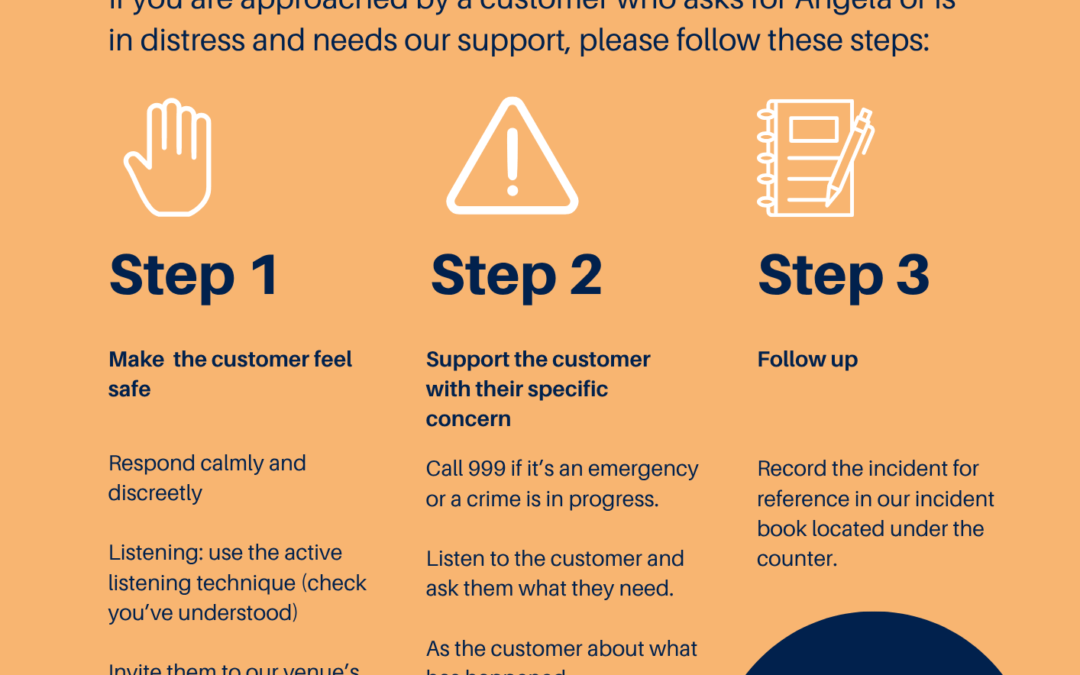
Some of you will have noticed the “Ask for Angela” poster in the library loo. As part of our application to become a licensed premises (see Three Rings and elsewhere for more info), we’ve been asked to take part in this initiative. I explain what it is and how it works below, but before I get into that, let me just say that it’s extremely unlikely you will ever be asked to intervene like this. After all, in over three years of operation, I’m not aware of us ever having had to help someone out in this way. But that doesn’t mean it won’t happen. So it’s up to all of us to make sure we’re informed.
The Background
This discreet safety programme has been quietly revolutionising how people—particularly women—can ask for help in social spaces like bars, clubs, and restaurants. First launched in 2016 by Lincolnshire County Council, the campaign offered a simple lifeline: if you feel unsafe, just go to a staff member and “Ask for Angela.” That’s it.
The phrase signals trained staff to assist you—whether by helping you exit discreetly, calling you a cab, or even contacting authorities. Posters, usually displayed in toilets, quietly explain the code to those who might need it. No fuss. No escalation. Just help.
How It Works
In a participating venue, the staff are briefed and often trained using the WAVE (Welfare and Vulnerability Engagement) protocol. If a patron asks for Angela, staff should know exactly what to do—escort them to safety, check on them privately, or make sure they get home securely.
Why It Matters
The campaign was born out of a tragic reality: not everyone feels safe in public. In the age of dating apps and social media connections, people often meet strangers in bars or restaurants, and not all those encounters are harmless.
What makes “Ask for Angela” effective is its simplicity and discretion. It’s a tool that puts safety back into the hands of the vulnerable, without drawing attention or forcing confrontation.
And it works—when it’s implemented properly. It depends on YOU being aware of the programme, and how you can help.
A BBC investigation found that more than half of venues they tested didn’t respond appropriately when someone asked for Angela. Some staff were confused. Others didn’t recognize the phrase. And some Reddit users have echoed this concern: “Everyone needs to know the code for it to work. But if everyone knows it, how is it still secret?”
It’s a valid point. A safety code that’s widely publicized can lose its covertness. But a secret that’s too secret doesn’t protect anyone either. It’s a delicate balance.
Other critics argue that the campaign can become performative—venues putting up posters without proper training behind the scenes. And some users find alternatives like the “Angel Shot” system, which is incorporated directly into drink orders, more intuitive and less likely to be misunderstood.
So—Does It Work?
When done right, yes. Absolutely.
There are real-life accounts of people who’ve used the code to exit dangerous situations, and of bartenders who stepped in and prevented harm. It’s a quiet, community-driven way of saying: “We see you. We’ve got you.”
But it’s only as strong as its execution.
Without awareness, and without a clear process, “Ask for Angela” risks becoming just another well-meaning poster on a bathroom wall.
Final Thoughts
Ask for Angela is a brilliant, compassionate idea. It reflects a world trying to take safety more seriously—especially for women and vulnerable individuals in nightlife spaces. But for it to truly work, venues need more than just the slogan. They need to be prepared.
Because when someone asks for Angela, they’re really asking:
“Will someone help me if I can’t help myself?”
Let’s make sure the answer is always yes.